
Latest posts by Marina Rozalén and Aida Massó (see all)
- Populismo en España: conceptos, trayectorias y efectos políticos - March 3, 2026
- Populism in Spain: Concepts, Trajectories, and Political Effects - March 2, 2026
Populism has become one of the major challenges facing contemporary Western democracies, reshaping political competition, public discourse, and citizen engagement (Kriesi et al., 2008; Müller, 2014). Rather than a single ideology, it is best approached as a flexible phenomenon combining ideological content, political strategy, and communicative style. Ideologically, populism constructs politics as a moral struggle between two antagonistic camps “the people” and “the elite” and asserts that legitimate politics must express the people’s general will (Mudde, 2004). Strategically, it relies on direct, often deinstitutionalised appeals to broad constituencies and weakly organised supporters (Weyland, 2001). Stylistically, it dramatizes political conflict, personalizes leadership, and privileges emotionalised and simplified rhetoric (Moffitt, 2016). In Spain, the literature increasingly treats these dimensions as complementary: populism is multidimensional and can be analysed across ideology, leadership, and communicative performance (Olivas Osuna, 2021).
Spain offers a particularly revealing case because populism has grown through distinct phases and in multiple political arenas. Left-wing populism emerged first in the wake of the 2008 economic crisis, institutional distrust, and social mobilisation, crystallising primarily in the rise of Podemos, a new nationwide political party founded in 2014. Right-wing populism consolidated later, strongly linked to territorial conflict, cultural disputes, and the politicisation of national identity, with Vox becoming its main organisational expression at the state level.
The Spanish experience also illustrates how populism operates at different territorial levels: beyond state-wide parties, populist dynamics appear in sub-state nationalist movements, especially in Catalonia and the Basque Country, two autonomous communities with strong nationalist traditions and significant devolved powers within Spain’s quasi-federal system.
This article examines populism in Spain by integrating conceptual debates with the country’s political trajectories and policy effects. It focuses on why Vox has become the most disruptive populist actor in the current cycle, while left-wing populism, associated with Podemos, has undergone institutionalisation and moderation.
Political and Institutional Context: Democratisation, Territorial Structure, and Party System Change
Spain has been a parliamentary monarchy since the 1978 Constitution, which ended the authoritarian regime of Francisco Franco (1939–1975). Francoism combined nationalist, conservative, and authoritarian ideology, centred on strong central state control, suppression of regional autonomy, censorship, and restrictions on political freedoms and democratic institutions. The post-1978 democratic system established separation of powers, political pluralism, and civil liberties.
A defining feature of Spain’s democratic architecture is territorial decentralisation. The Constitution created an open and asymmetric “State of Autonomies,” meaning it did not fix a uniform or final distribution of competences. Instead, different autonomous communities developed varying degrees of self-government over time. Spain is composed of 17 autonomous communities with extensive powers in areas such as education, healthcare, and social services. While the model combines self-government with national unity, its incomplete and evolving character has generated persistent centre–periphery tensions. These tensions are not merely background conditions: they have become politicised resources that populist actors mobilise to frame conflicts over sovereignty, identity, and legitimacy.
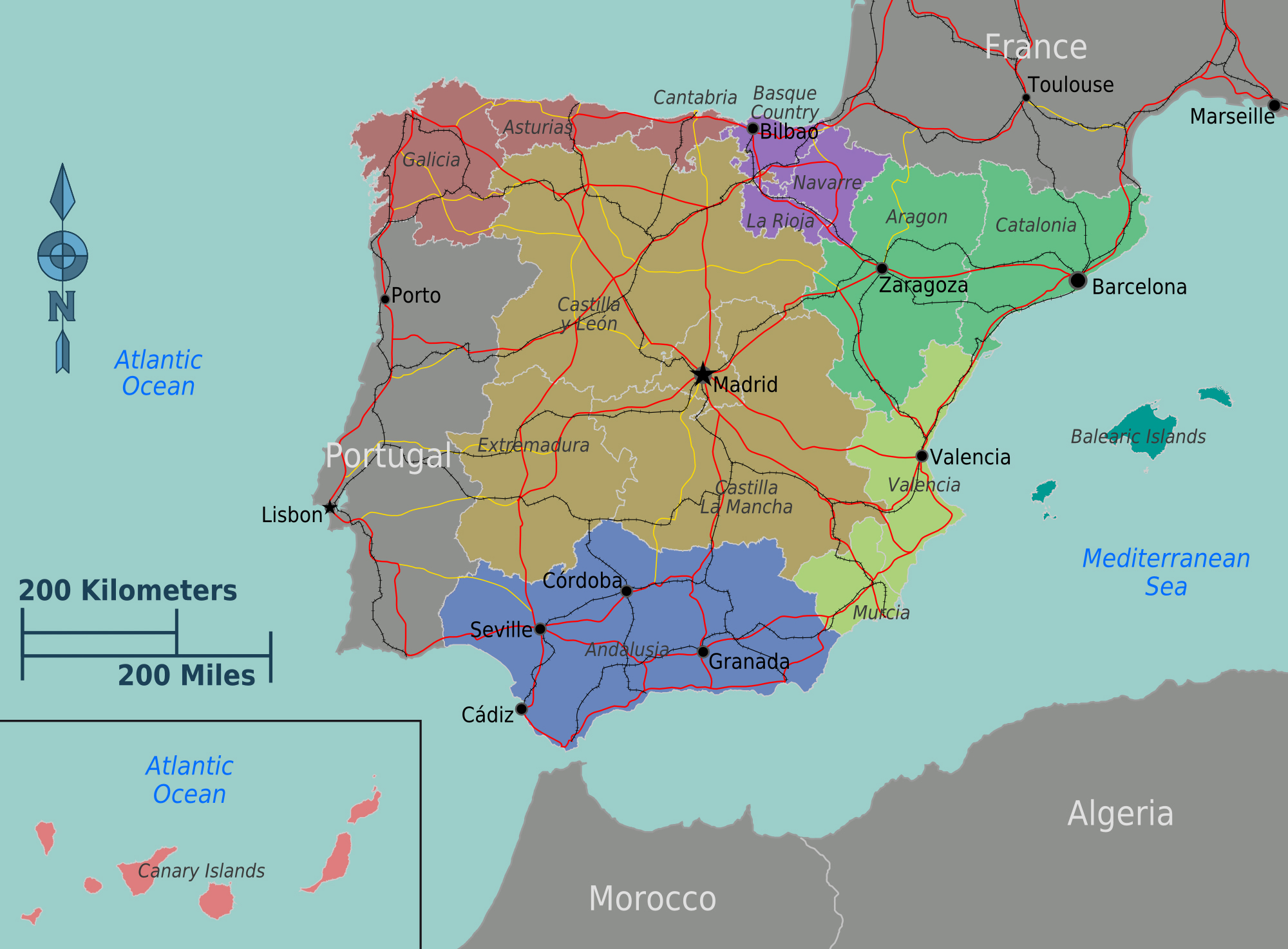
For decades after democratisation, Spain was dominated by an imperfect two-party system: the Partido Socialista Obrero Español (PSOE), a centre-left social-democratic party, and the Partido Popular (PP), a centre-right conservative party. Spain uses proportional representation rather than a winner-take-all system, but its design—particularly relatively small districts—traditionally favoured large parties, reinforcing bipolar competition. This structure contributed to stability but limited the institutional space for emerging movements and alternative political identities.
The global financial crisis of 2008, commonly referred to as the Great Recession, disrupted this equilibrium. Rising unemployment, job insecurity, austerity measures, and perceived corruption weakened trust in the traditional parties and opened the way to a more fragmented, multi-party system. This change created favourable conditions for populist actors on both left and right, as well as for territorial parties whose influence grew under parliamentary fragmentation.
Conceptualisations of Populism in the Spanish Debate
In Spain, as in much of Europe, “populism” is widely used in public debate but often imprecisely and derogatorily. Politicians and journalists frequently deploy the term to delegitimise opponents or associate them with extremist traditions (Griffin, 1991, p. 26).
Building on Mudde’s (2004) influential definition, populism is commonly understood as a thin-centred ideology that divides society into two “the pure people” versus “the corrupt elite” and claims that politics should express the general will (Olivas Osuna, 2021). This perspective emphasises moralisation, in the sense that political disagreement is no longer framed as a legitimate competition between alternative programmes or policy preferences, but rather as an ethical confrontation between morally virtuous and morally corrupt actors. Politics thus ceases to be conceived as pluralistic contestation and instead becomes a struggle over who truly embodies democratic legitimacy and who is portrayed as betraying it.
At the same time, other research conceptualises populism as a political strategy. Weyland (2001, p. 14) defines it as a mode of leadership in which a leader seeks or exercises authority through direct or deinstitutionalised support from large, loosely organised masses. Studies of Spanish populism also stress communicative features: emotional appeals, simplification, and polarising rhetoric especially in digitally mediated environments (Olivas Osuna, 2021). Rather than treating ideology, strategy, and style as competing definitions, the Spanish literature increasingly views them as analytically complementary (Olivas Osuna, 2021): populism can be recognised through its direct mobilisation logic, and its performance of crisis and confrontation (Moffitt, 2016).
A crucial conceptual complication in Spain is the relationship between populism and nationalism. Although analytically distinct, the two often overlap and reinforce one another (Brubaker, 2020, pp. 44–45). This overlap matters because Spain contains multiple national projects within a single political space. State nationalism typically frames itself as civic and constitutional—centred on legal equality, national sovereignty, and democratic legitimacy—while peripheral nationalisms emphasise distinct cultural identities and claims to self-determination. The coexistence of these projects creates an environment in which “people vs. elite” narratives can attach easily to disputes over territory and sovereignty.
In contemporary Spain, nationalism operates less as a fixed ideological position than as a relational framework structured by territorial conflict. The centre–periphery cleavage periodically intensifies, most notably during the Catalan independence crisis of the 2010s. That episode escalated between 2012 and 2017 and included the mobilisation of the independence movement, the unilateral referendum of October 2017, and institutional confrontation between Catalan authorities and the Spanish state. In this context, state nationalism becomes especially salient when national integrity is perceived to be under threat—whether from secessionist movements, perceptions of excessive regional autonomy, migration framed as culturally incompatible, or corruption and policies viewed as privileging certain territories or groups (Heras-Pedrosa et al., 2020, 2020; Turnbull-Dugarte, 2019).

Because nationalist conflict so often provides the “substance” of political antagonism, public debate sometimes collapses populism into nationalism. Yet recent scholarship stresses that populism in Spain should not be reduced to extreme rhetoric or protest behaviour. It constitutes a political logic capable of reconfiguring party competition, mobilising discontent, and redefining the boundaries of democratic legitimacy (Küppers, 2024; Olivas Osuna, 2021). This distinction is particularly relevant when analysing Vox, where the nationalist framing does not replace populism but rather reinforces it, intensifying the moral dichotomy between a homogeneous “people” and its perceived adversaries.
Actors and Competitive Dynamics: Why Vox Dominates the Current Phase
opulism remains a significant feature of Spanish politics, although its prominence varies across parties and regions. Since the breakdown of the two-party system, populist actors on both the left and the right have influenced the political agenda. However, in the current phase, Vox, a radical right party founded in 2013, constitutes the most dynamic and disruptive populist actor. This assessment is not merely normative but reflects differences in the parties’ political trajectories and institutional positions.
Podemos, a left-wing party founded in 2014 following the cycle of mobilisation associated with the 15-M movement —a citizen protest movement that began in May 2011 against austerity, corruption, and the crisis of political representation— has undergone processes of moderation and partial integration into government, which have diluted its initially confrontational populist framing. Vox, by contrast, has largely maintained an oppositional stance and mobilises exclusionary narratives centred on national identity, immigration, and territorial unity. As a result, Vox has developed a notable capacity for agenda-setting and influence in coalition negotiations, with implications for liberal-democratic principles such as pluralism, equality, and rights at both the national and regional levels.
Left-Wing Populism: 15-M, Podemos, and the Reconfiguration of the Left
Left-wing populism in Spain is closely linked to the 15-M (Indignados) movement and its aftermath. The roots of this cycle are connected to the economic collapse of 2008, which produced intense social insecurity. Unemployment rose from 8.2% in 2007 to over 26% in 2013, youth unemployment exceeded 55% at its peak (Eurostat, 2017), and GDP contracted by nearly 9% between 2008 and 2013 (Martí & Pérez, 2016). Austerity and unemployment created conditions for large-scale mobilisation.
The 15-M movement—also known as the Indignados—was a grassroots protest movement that emerged in May 2011, characterised by the occupation of public squares and the organisation of open citizen assemblies in cities across Spain. Its name refers to the coordinated demonstrations held on 15 May 2011. It was a heterogeneous and cross-cutting mobilisation that denounced corruption, the lack of political representation, and the social consequences of the economic crisis under the slogan “Real Democracy Now.” Partly inspired by Indignez-vous! (2011), a manifesto by Stéphane Hessel, a French diplomat, writer, and former member of the French Resistance, the movement positioned itself against the established party system and promoted new forms of political participation based on deliberative assemblies, collective decision-making, and collaborative engagement (Prentoulis & Thomassen, 2013). Digital platforms and social media were central to its rapid expansion (Anduiza et al., 2014), enabling horizontal coordination and large-scale mobilisation. Its repertoire resonated internationally, influencing mobilisations such as Occupy in the United States and protest camps in Greece.
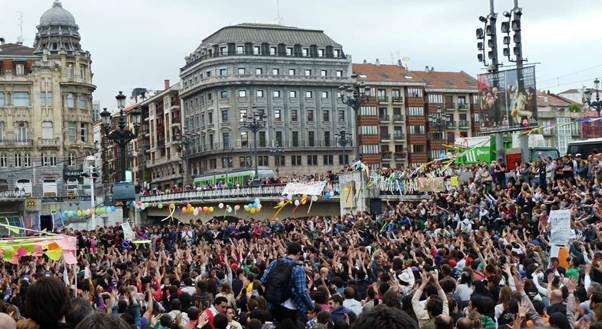
Podemos was founded in 2014 as an attempt to translate this crisis of legitimacy into an organised political project. Its founders initially sought to transcend the conventional left–right divide, framing politics as a confrontation between “the people” and “la casta” (Errejón & Mouffe, 2016). Over time, the party adopted a clearer left-wing orientation and defended policies such as higher social spending, progressive taxation, a guaranteed minimum income, stronger labour protections, participatory democracy, and public control of strategic sectors. The broader left-wing populist constellation also included actors such as Más País (born from a split within Podemos) and Catalunya en Comú (often cooperating electorally with Podemos), illustrating how the 15-M cycle restructured the left organisationally as well as discursively.
Podemos’ entry into the PSOE–Unidas Podemos coalition government (2020–2023) demonstrated that populist rhetoric can translate into formal political power and operate within institutional constraints (Olivas Osuna, 2021, p. 7). Yet institutional participation also contributed to moderation and internal tensions, and after its period in government, fragmentation and electoral decline led to reconfiguration. In this context, Sumar emerged in 2023 as a broader and more pragmatic left-wing coalition integrating parts of Podemos alongside other progressive actors, emphasising governability and programmatic consensus over confrontational populist rhetoric.
Right-Wing Populism: Vox and the End of “Exceptionalism”
For years, Spain was often portrayed as an anomaly in Europe due to the absence of a strong radical-right populist party (Alonso & Rovira-Kaltwasser, 2015). This perception changed after Vox’s breakthrough in the Andalusian regional elections of December 2018, followed by consolidation in national contests. Research highlights how political fragility, corruption scandals, and the Catalan crisis—that is, the pro-independence mobilisation that culminated in the unilateral referendum of October 2017 and the subsequent institutional confrontation between Catalan authorities and the Spanish state—created favourable conditions for Vox’s growth, enabling it to present itself as a force capable of restoring order and national sovereignty in the face of territorial fragmentation (Turnbull-Dugarte, 2019; Rama et al., 2021).
Vox combines nationalist, nativist, and populist narratives that frame politics as a conflict between ordinary Spaniards and anti-Spanish elites (Brubaker, 2020, p. 50). Immigration is central to this framing: it is portrayed as a threat to national cohesion, public security, and welfare sustainability, allowing Vox to draw symbolic boundaries around a homogeneous national “people” and depict elites as complicit in the erosion of sovereignty and social order. Turnbull-Dugarte (2019) argues that attitudes toward immigration and national identity were crucial to Vox’s electoral rise and to the end of Spain’s “exceptionalism” regarding the radical right.
Electorally, Vox secured 52 seats with about 15% of the vote in the November 2019 general election, becoming the third-largest party[1] in Congress. However, in the 2023 general election its representation declined to 33 seats and around 12% of the vote, although it remained a significant parliamentary force. Its influence extends beyond national politics into the regional arena. Spain’s 17 autonomous communities each have their own elected parliament and government, with authority over key policy areas such as education, healthcare, and social services. In this context, Vox has supported or participated in regional governments in Extremadura, Aragón, Castilla y León, and the Valencian Community, disrupting established coalition arrangements and reshaping patterns of inter-party cooperation.

Drawing on Cheddadi El Haddad and León Ranero (2022), Vox’s migration policy is better understood not as a blanket rejection of immigration but as ethnic selectivity. Vox articulates a bimodal discourse that conditionally legitimises immigration from culturally proximate groups—particularly Latin Americans—while constructing other migrant populations, especially of Muslim origin, as culturally incompatible and socially threatening. This illustrates how populist “people vs. elite” moral binaries can be reinforced through cultural boundary-making.
Territorial Parties and Sub-State Populist Dynamics
In addition to state-wide parties, Spain’s party system includes influential territorial and nationalist parties, such as ERC (left-wing pro-independence), Junts (centre-right pro-independence), PNV (centre-right autonomist), and EH Bildu (left-wing pro-independence). Their role is crucial under parliamentary fragmentation because they can shape government formation and legislative outcomes.
Populist elements can also be identified in sectors of the Catalan and Basque secessionist movements, which often portray central state institutions as illegitimate elites acting against local populations. In Catalonia, an autonomous community in northeastern Spain with a strong pro-independence movement, the Spanish state is frequently framed as an elite that obstructs democratic self-determination (García Segura, 2017). In the Basque Country, an autonomous community in northern Spain with a longstanding nationalist tradition, nationalist-populist discourse may present the conflict as a moral struggle contrasting the “good” governance of Basque institutions with the corruption and political spectacle of the Spanish state; this moral framing is used to justify demands for greater self-government and a renewed Statute of Autonomy (Azkune, 2020). Analyses of regional rhetoric confirm the recurrence of themes such as the virtuous people versus internal or external elites within nationalist movements (Casas-Mas, Rodríguez-Sáez & Gutiérrez, 2025).
Forti (2020) argues that the Catalan procés, the Catalan term used to refer to the political and institutional process aimed at achieving Catalan independence, which developed primarily between 2012 and 2017, should be understood as a manifestation of the broader populist wave affecting Western democracies since the late 2000s. The procés involved both mass mobilisation and institutional conflict during the 2010s and reproduced core populist dynamics: a moralised opposition between a homogeneous “Catalan people” and an illegitimate external elite (central Spanish institutions), an appeal to an unlimited notion of popular sovereignty, and the reduction of internal pluralism through framing dissent as betrayal.
Demand-Side Conditions: Distrust, Polarisation, and the Informational Environment
These expressions of populism unfold in a broader context shaped by citizen dissatisfaction, polarisation, and distrust in institutions—conditions that create fertile ground for populist narratives (Olivas Osuna, 2021, p. 9). Survey evidence illustrates this environment in detail.
Eurobarometer (2023) reports that in Spain, 90% of respondents express low or no trust in political parties, 73% in the government, and 70% in the media. These figures exceed EU averages (60%, 54%, and 53% respectively), indicating comparatively high institutional scepticism. Distrust is measured through standard survey questions on confidence in institutions ranging from “a great deal” to “none at all.” Over the past decade, distrust in political parties increased from roughly 75% in 2013 to 90%, reflecting growing disillusionment after the euro crisis and repeated corruption scandals. Comparative figures show variation: France reports 68% distrust in parties, Germany 55%, Sweden 40%, and Poland 72% (Eurobarometer, 2023). While scepticism can be normal in democracies, sustained high distrust creates permissive conditions for delegitimising claims and alarmist framings.
This environment is amplified by perceived disinformation. According to Eurobarometer (2023), 78% of Spaniards report frequently encountering misleading or false news, and 83% consider disinformation a serious problem. Such perceptions are important for populist politics because they support narratives that established media and elites are untrustworthy intermediaries, thereby legitimising direct communication and outsider claims to authenticity.
Longer-run trends in Spain reinforce the demand-side argument. Ferrero (2019), drawing on CIS barometers, shows that distrust toward political parties—already persistently high—rose sharply following the 2008 crisis and remained very high throughout the 2010s. Distrust in representative institutions such as parliament and the government also increased substantially compared to early 2000s levels.
Supply-Side Dynamics: Digital Communication and Populist Style
The expansion of social media and new communication technologies has enabled populist actors to disseminate direct, simplified, and emotionally charged messages without relying on traditional media intermediaries. In Spain, this transformation interacted with the territorial conflict stemming from the Catalan independence movement, which culminated in the unilateral referendum of October 2017 and a subsequent institutional confrontation between Catalan authorities and the Spanish state. It also intersected with widespread distrust generated in the aftermath of the 2008 economic and financial crisis, marked by severe austerity measures and prolonged unemployment. Together, these dynamics facilitated both the early rise of left-wing populism and the rapid growth of Vox after 2018 (Turnbull-Dugarte, 2019; Rama et al., 2021).
Empirical evidence supports the role of digital style in Vox’s mobilisation. Domínguez-García et al. (2025) find that nearly 70% of Vox’s campaign-related social media posts contain at least one antagonistic element—such as direct attacks on political opponents or institutions—and are framed through mobilising emotions, with indignation, pride, and anger predominating. This communication style is associated with significantly higher engagement and diffusion, especially on visually oriented platforms such as Instagram and TikTok.
The party’s digital reach is also striking. As of January 2026, Vox’s official Instagram account has 817.1 thousand followers, compared with 170.4 thousand for PSOE and 72.3 thousand for PP. This imbalance suggests that supporters of populist parties are not only active online but are also disproportionately exposed to direct and emotionally charged political messaging, amplifying populist narratives relative to mainstream competitors.
These findings align with broader scholarship emphasising recurring populist features: binary narratives, moralised conflict, and the construction of threatening “others” against which “the people” are defined (Moffitt, 2016, p. 26). In Spain, such features appear across ideological positions, but they are particularly visible in Vox’s digital communication, where antagonism functions as both message content and mobilisation technique.
Dominant Narratives and Ideological Variation
While democratic politics inherently involves contesting elite power and demanding accountability, populism differs by reframing political competition as a struggle over legitimacy and by constructing a homogeneous “people” opposed to a corrupt or self-serving “elite,” often rejecting liberal-democratic constraints such as pluralism and institutional mediation (Mudde, 2004). In Spain, this populist logic cuts across ideological boundaries. Olivas Osuna (2021) shows that antagonistic framing appears in parties of the left, right, and sub-state nationalist movements, even though their ideological projects differ substantially.
On the left, Podemos historically articulated a socio-economic populist narrative focused on inequality, democratic regeneration, and denunciation of “la casta.” Its early discourse helped mainstream anti-elitism and moralised political conflict, framing politics as a struggle over legitimacy rather than conventional ideological disagreement (Olivas Osuna, 2021, p. 7). On the right, Vox combines anti-elitism with a strong defence of national unity. It portrays the political establishment as responsible for territorial disintegration and erosion of traditional values (Vampa, 2020), using national identity to construct a homogeneous people imagined as under threat (Olivas Osuna, 2021). Its rhetoric targets regional independence movements and perceived unequal territorial treatment, framing these dynamics as threats to cohesion and shared identity. This narrative resonates because it draws on perceptions of territorial and cultural threat and offers voters a sense of agency, belonging, and protection.
Populism and Policy Influence: Direct Effects and Spillover
Populism in Spain exerts a moderate but tangible influence on governmental policies, primarily through shaping debate, setting the agenda, and pressuring mainstream parties to adopt certain positions. Even without consistent majorities in government, populist narratives and electoral strength affect policy priorities.
On the right, Vox has influenced national and regional policymaking since entering parliament in 2019. Its discourse emphasising national unity, traditional values, and anti-elite framing has primarily pressured its governing partners at the regional level, that is, within the executives of Spain’s autonomous communities, as it has not been part of the national government. It has also influenced mainstream conservative parties at the national level to adopt stricter stances on immigration, security, and centralisation (Brubaker, 2020; Vampa, 2020).
At the national level, it has pushed for tougher immigration controls, including stricter border enforcement and reduced asylum quotas. In regional governments, particularly where Vox exercises influence through parliamentary agreements, its presence has contributed to policies promoting the centralisation of education and law enforcement competences, as well as measures emphasising Spanish national identity. These dynamics illustrate a spillover effect: populist framing can shape legislative agendas, budget allocations, and administrative priorities beyond a party’s direct seat share.
On the left, Podemos’ entry into the coalition government formed after the November 2019 elections, formally constituted in January 2020, allowed it to institutionalise parts of its socio-economic agenda, including welfare expansion, anti-austerity measures, and transparency reforms (Olivas Osuna, 2021). The subsequent reconfiguration of the political space to the left of the PSOE after the 2023 elections, marked by the emergence of Sumar, reduced Podemos’ direct institutional weight. Nonetheless, its period in government illustrates how populist ideas can translate into legislative outcomes when parties gain access to executive office, even if such access tends to moderate their confrontational style.
Indirect influence is equally important. Populism shapes public attitudes and political discourse, generating pressure on mainstream parties to respond to issues framed in populist terms. Inequality, corruption, and territorial tensions remain salient partly because they are repeatedly mobilised through populist narratives across the ideological spectrum (Olivas Osuna, 2021; Casas-Mas, Rodríguez-Sáez & Gutiérrez, 2025). Mainstream parties may adopt elements of populist rhetoric—simplification, emotional appeals, moral contrasts—to compete for attention. Left-leaning parties can intensify anti-corruption and social injustice frames reminiscent of Podemos; right-leaning actors may incorporate nationalist or anti-establishment tropes similar to Vox. In this way, populism contributes to an environment in which moralised conflict structures debate even beyond parties most commonly labelled “populist.”
Party Responses and Prospects: Democratic Support, New Actors, and Future Risks
Mainstream parties respond to populist challengers under conditions of heightened polarisation and contestation over democratic legitimacy. Confrontational narratives—Podemos’ critique of the post-transition order, Vox’s antagonism toward immigrants and separatists, and secessionist framings of the Spanish state—push traditional parties to defend institutional legitimacy and constitutional principles, while also adapting to a more antagonistic media environment.
Predicting the future of populism in Spain remains difficult. Maza and Hierro (2025) argue that several factors may reinforce the radical right, including the persistence of territorial conflict, the diffusion of radical-right parties across Europe, and recurring corruption scandals affecting mainstream parties. Perceptions about migration and welfare deservingness may also sustain support for the radical right (Maza & Hierro, 2025).
At the same time, changes in democratic attitudes among younger citizens raise concerns. Lorente and Jiménez-Bravo (2025) document a decline in democratic support among younger Spaniards, especially young men and centrist youth highly exposed to social media. Using longitudinal CIS data and standard indicators of regime preference, they show that the share of respondents aged 18–24 who agree that democracy is preferable declined from over 80% in 2019 to around 76% in 2024, while those who consider authoritarian alternatives acceptable “under certain circumstances” rose to nearly 14%. This erosion of diffuse democratic support is more pronounced among young men, who tend to consume more polarising political content online (Lorente & Jiménez-Bravo, 2025).
The emergence of Aliança Catalana illustrates how populist competition may intensify at the sub-state level. Although still electorally limited, its rapid ascent from a local platform to parliamentary representation signals the potential consolidation of an exclusionary nationalist-populist actor within Catalan politics. Its discourse combines secessionist nationalism with anti-immigration and anti-elite frames, drawing on identity grievances and dissatisfaction with established pro-independence parties. From a prospective standpoint, this development suggests that populist dynamics in Spain may not only persist at the state-wide level but also deepen within territorial arenas, contributing to further polarisation and normalisation of illiberal narratives.
Conclusion
Populism in Spain has developed through interconnected waves shaped by economic crisis, institutional distrust, territorial conflict, and the transformation of political communication. Conceptually, it is best understood as a multidimensional phenomenon combining a moral binary between “people” and “elite” (Mudde, 2004), strategic reliance on direct support (Weyland, 2001), and a performative style that dramatizes conflict and mobilises emotions (Moffitt, 2016), increasingly analysed as a combined framework in Spanish scholarship (Olivas Osuna, 2021).
Empirically, Spain shows how populism can emerge from both socio-economic and territorial crises. Left-wing populism—linked to 15-M and Podemos—helped mainstream anti-elitism and reshape the left, later undergoing institutionalisation through coalition government (Olivas Osuna, 2021). Right-wing populism—consolidated by Vox—ended Spain’s perceived exceptionalism (Alonso & Rovira-Kaltwasser, 2015) and has become the most disruptive actor in the current cycle, combining nationalism, nativism, and anti-elite framing (Brubaker, 2020; Turnbull-Dugarte, 2019) with strong digital mobilisation dynamics (Domínguez-García et al., 2025).
Spanish populism is also multi-level: sub-state movements and parties have mobilised populist logics through centre–periphery conflict, with the Catalan procés constituting a key case of moralised sovereignty claims and contested legitimacy (Forti, 2020). In policy terms, populism’s influence is often indirect but significant, operating through agenda-setting, coalition leverage, and discursive spillover that pressures mainstream parties to adapt (Brubaker, 2020; Vampa, 2020; Casas-Mas, Rodríguez-Sáez & Gutiérrez, 2025).
Finally, the outlook is shaped by both political and societal factors: persistent territorial conflict and corruption risks, evolving attitudes toward migration (Maza & Hierro, 2025), changing democratic support among youth (Lorente & Jiménez-Bravo, 2025), and the emergence of new radical actors such as Aliança Catalana. Taken together, Spain illustrates how populism can reconfigure democratic competition not only by changing party systems, but also by transforming how legitimacy, identity, and political conflict are narrated in public life.
Bibliography
Alonso, S., & Rovira Kaltwasser, C. (2015). Spain: No country for the populist radical right? South European Society and Politics, 20(1), 21–45. https://doi.org/10.1080/13608746.2014.985448
Anduiza, E., Cristancho, C., & Sabucedo, J. M. (2014). Mobilization through online social networks: The political protest of the Indignados in Spain. Information, Communication & Society, 17(6), 750–764. https://doi.org/10.1080/1369118X.2013.808360
Azkune Torres, J. (2020). Nationalism, Hegemony and Populism: The Basque Case as a Symptom of a Global Phenomenon. Ethnopolitics, 19(3), 229–251. https://doi.org/10.1080/17449057.2019.1700645
Brubaker, R. (2020). Populism and nationalism. Nations and Nationalism, 26(1), 44–66. https://doi.org/10.1111/nana.12522
Casas-Mas, B., Rodríguez-Sáez, A., & Gutiérrez, I. (2025). Voices of discontent: Unpacking populist rhetoric in Spain and the rise of anti-European sentiment. Media and Communication, 13, Article 10688. https://doi.org/10.17645/mac.10688
Cheddadi El Haddad, Z., & León Ranero, J. M. (2022). Selectividad étnica en el discurso migratorio de Vox: entre el pragmatismo y el esencialismo. Papers. Revista De Sociologia, 107(1), 61–87. https://doi.org/10.5565/rev/papers.2930
Domínguez-García R, Baptista JP, Pérez-Curiel C, Fonseca DEMd. From Emotion to Virality: The Use of Social Media in the Populism of Chega and VOX. Social Sciences. 2025; 14(5):255. https://doi.org/10.3390/socsci14050255
Errejón, Í., & Mouffe, C. (2016). Podemos: In the name of the people. Lawrence & Wishart.
Europa Press. (2023, March 23). El 73 % de los españoles desconfía del Gobierno y el 90 % de los partidos, según Eurobarómetro. https://www.europapress.es/nacional/noticia-73-espanoles-desconfia-gobierno-90-partidos-eurobarometro-20230323135043.html
Europa Press. (2024, December 11). El 45 % de los españoles satisfechos con la democracia en España, frente al 55 % de los europeos, según Eurobarómetro. https://www.europapress.es/nacional/noticia-45-espanoles-satisfechos-democracia-espana-frente-55-europeos-eurobarometro-20241211114355.html
European Commission. (2023). Standard Eurobarometer 98: Public opinion in the European Union, spring 2023 – National report: Spain.https://search.gesis.org/research_data/ZA7953
Eurostat. (2017). Unemployment statistics.
Ferrero, M. (2019). España: Crisis e indignación. El movimiento 15 de mayo (15M) y su impacto en la política española (Serie Minutas N.º 157-19). Biblioteca del Congreso Nacional de Chile.
Forti, S. (2020). ¿Nacional-populismo a la catalana? Repensar el Procés en el contexto europeo. Historia del Presente, 35, 69–90. https://doi.org/10.5944/hdp.35.2020.40488
García Segura, C. (2017). Sub-state diplomacy: Catalonia’s external action amidst the quest for state sovereignty. International Negotiation, 22(2), 344–367. https://doi.org/10.1163/15718069-02202002
Griffin, R. (1991). The nature of fascism. St. Martin’s Press.
Heras-Pedrosa, C., López, F., & Rodríguez-Torrico, P. (2020). Populism and independence movements in Europe: The Catalan–Spanish case. Social Sciences, 9(4), 35. https://doi.org/10.3390/socsci9040035
Hessel, S. (2011). Indignez-vous! Indigène éditions.
Kriesi, H., Grande, E., Lachat, R., Dolezal, M., Bornschier, S., & Frey, T. (2008). West European politics in the age of globalization. Cambridge University Press.
Küppers, R. (2024). The far right in Spain: An ‘exception’ to what? European Journal of Cultural & Political Sociology, 11(4), 517–540. https://doi.org/10.1080/23254823.2024.2321905
Lorente, J., & Jiménez-Bravo, I. (2025). A future of authoritarian citizens? Explaining why Spanish youth are losing faith in democracy. Frontiers in Political Science, 7, 1553307. https://doi.org/10.3389/fpos.2025.1553307
Martí, F., & Pérez, J. J. (2016). Spanish public finances through the financial crisis (Documento de Trabajo No. 1620). Banco de España.
Maza, A., & Hierro, M. (2025). The emergence of the radical right on the Spanish political scene: Towards a spatial perspective. Regional Science Policy & Practice, 17(7), Article 100193. https://doi.org/10.1016/j.rspp.2025.100193
Moffitt, B. (2016). The global rise of populism: Performance, political style, and representation. Stanford University Press.
Mudde, C. (2004). The populist zeitgeist. Government and Opposition, 39(4), 541–563. https://doi.org/10.1111/j.1477-7053.2004.00135.x
Müller, J.-W. (2014). What is populism? University of Pennsylvania Press.
Olivas Osuna, J. J. (2021). From chasing populists to deconstructing populism: A new multidimensional approach to understanding and comparing populism. European Journal of Political Research, 60(1), 2–27. https://doi.org/10.1111/1475-6765.12428
Olivas Osuna, J.-J. (2021). Populismo en España: Fundamentos teóricos y relatos dominantes. Araucaria, 47(2), 371–401.
Prentoulis, M., & Thomassen, L. (2013). Political theory in the square: Protest, representation and subjectification. Contemporary Political Theory, 12(3), 166–184. https://doi.org/10.1057/cpt.2012.41
Rama, J., Zanotti, L., Turnbull-Dugarte, S. J., & Santana, A. (2021). The rise of the Spanish populist radical right. Routledge.
Rodríguez Sáez, A. (2021). La génesis del populismo en España entre 2011 y 2013: Un análisis desde la demanda. Revista Española de Investigaciones Sociológicas, 173, 121–140. https://doi.org/10.5477/cis/reis.173.121
Turnbull-Dugarte, S. J. (2019). Explaining the end of Spanish exceptionalism and the rise of Vox. Research & Politics, 6(2), 1–8. https://doi.org/10.1177/2053168019851680
Vampa, D. (2020). Competing forms of populism and territorial politics: The cases of Vox and Podemos in Spain. Journal of Contemporary European Studies, 28(3), 304–321. https://doi.org/10.1080/14782804.2020.1727869
Weyland, K. (2001). Clarifying a contested concept: Populism in the study of Latin American politics. Comparative Politics, 34(1), 1–22.
Footnote
[1] In the November 2019 general election, the Spanish Socialist Workers’ Party (PSOE) emerged as the largest party with 120 seats (28.0% of the vote), followed by the People’s Party (PP) with 89 seats (20.8%). Vox obtained 52 seats with approximately 15% of the vote, becoming the third-largest parliamentary force.