Latest posts by Hans Blokland (see all)
- Democracy Under Pressure: Political Radicalization and Citizen Discontent in East Germany - February 16, 2026
- The Fragility of Dutch Democracy: Populism, Fragmentation, and Voter Volatility - December 18, 2025
- SSW welcomes two new Erasmus-interns: Aida Massó Blasco and Marina Rozalén Miralles - November 21, 2025
Just like in numerous other Western countries, democracy in Germany is coming under increasing pressure. In 2026, legally mandated elections are scheduled in two western and three eastern federal states, and elections are looming in Brandenburg, where the coalition government of Social Democrats (SPD) and left-populists (BSW) collapsed in December. With the exception of Berlin, the right-wing extremist AfD is now polling at up to 40 percent in all East German states (around 25 percent across Germany as a whole). Ungovernability is looming because Die Linke and Bündnis Sahra Wagenknecht—also excluded by the Christian Democrats (CDU)—together have the support of between 15 and 20 percent of voters. At the national level, the two governing parties, CDU and SPD, together score only about 40 percent in recent polls; and no more than about 20 percent of voters say they are satisfied with government policy.
In recent years, the NGO Social Science Works has organized in Brandenburg six series of around 12 meetings each, consisting of dialogues with and between citizens. Based mainly on the experiences in Eisenhüttenstadt, which can be considered representative, this article offers a snapshot of the political mood in (East) Germany. The citizen dialogues ultimately brought together mainly people who are trying to resist the ongoing radicalization. They are now close to despair. Considerable attention is given to the successful ways in which the AfD manages to reach citizens. Which themes does it apparently exploit so successfully, and in what ways? If democratic forces want to defeat right-wing populism, they will have to learn from this.
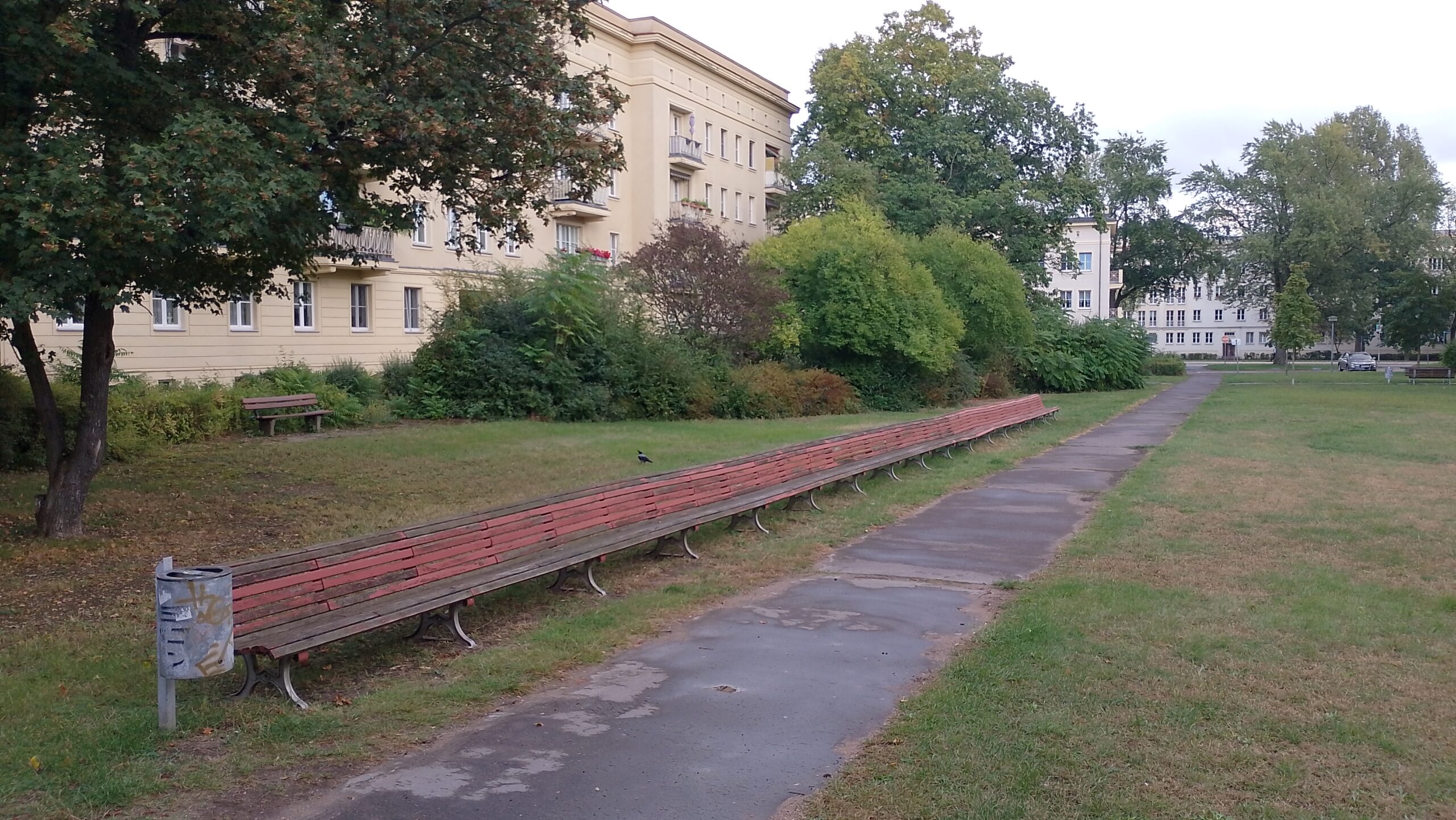
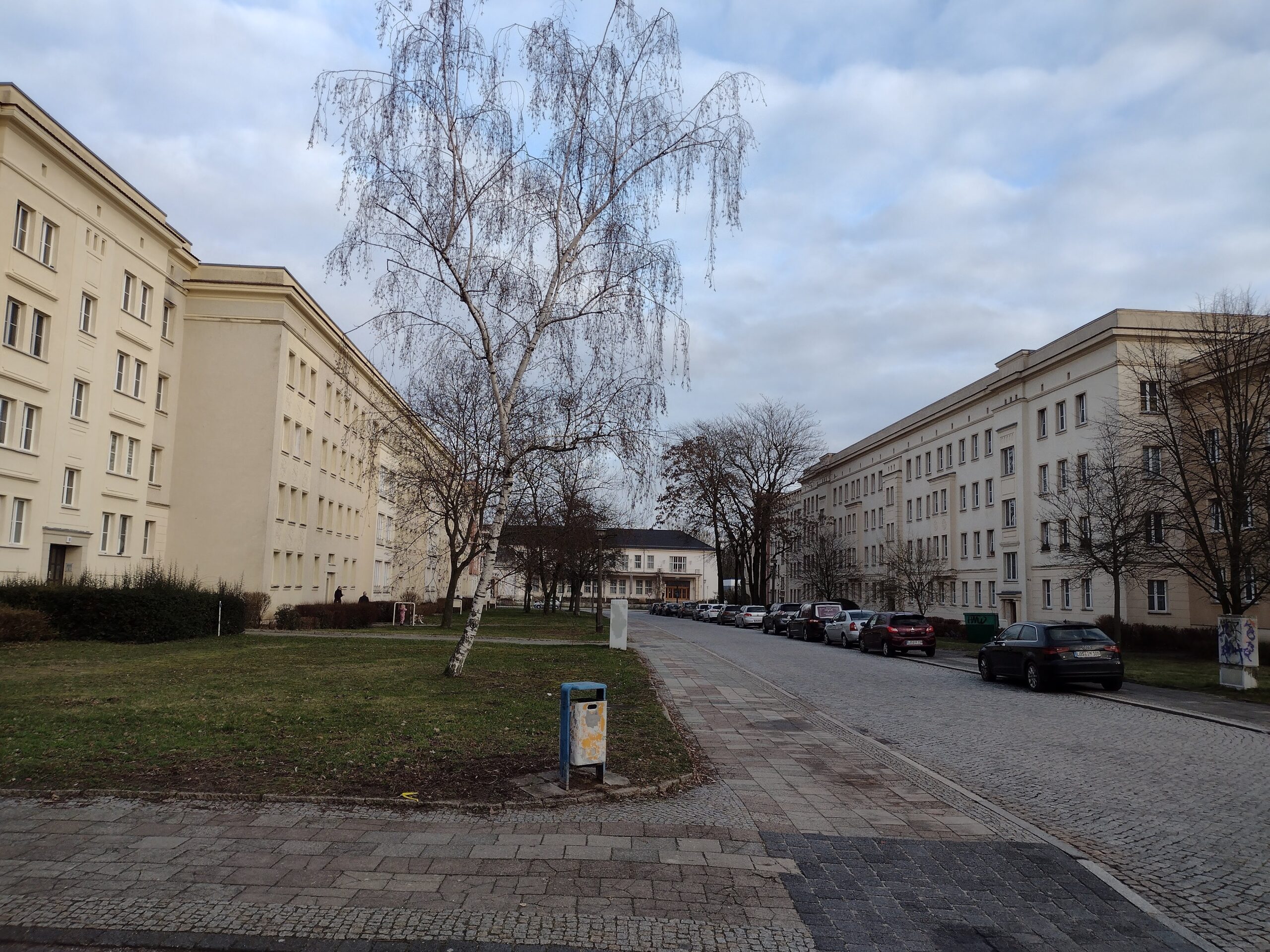
We are in a town on the German-Polish border with a population of around 24,000. It was built in the 1950s, practically from scratch, together with a huge steel factory. The quality of the houses and infrastructure was high in this socialist model town, designed by architect Kurt W. Leucht. Until 1961, it was called Stalinstadt, then Eisenhüttenstadt. The apartments in the symmetrical blocks of flats, decorated with socialist-realist art, were spacious and equipped with central heating, which was a luxury at the time. The large inner courtyards, visible from every apartment, featured parks, playgrounds, and playing fields. The clotheslines were used collectively. There were daycare centers, schools, shops, community centers, and cultural facilities. Especially in the early years, not everyone could live here. You had to be a socialist model citizen, a pioneer. The pioneers looked down somewhat on the people who moved to the city in later years. The carefully planned and now beautifully renovated city center, with money from the West, is today considered an important cultural and urban heritage site.
With German reunification in 1990 came decline, as in many communities in the former German Democratic Republic. The steelworks could not compete in the Western market to which it was suddenly exposed and had to close down for the most part. In a relatively short period of time, the city lost more than half of the 54,000 inhabitants it still had in 1989. Young people in particular moved away, mostly to West Germany or Berlin. If current demographic trends continue, the city has little future. In 1970, 813 children were born, but by 2022 this number had fallen to just 153 (from 18 to 6 children per 1,000 inhabitants). In 2022, a third of the population was over 65, and half was over 55.[1] The average age was 56 in 2024, six years higher than in Germany as a whole, which is already struggling with a rapidly aging population.
The decline of the economy, demographics, and community went hand in hand with the rise of populist parties. Although it is tempting to see a direct link, the two developments are not necessarily related. In 1990, the Social Democratic Party of Germany (SPD), the Christian Democratic Union (CDU), the ex-communist Die Linke, the Greens, and the liberal Free Democratic Party (FDP) received 34, 29, 16, 10, and 7 percent of the votes in the elections for the Landtag, the parliament of the state of Brandenburg.[2] Four years later, the SPD reached its peak in the steel city with 54 percent. The FDP and the Grünen had already fallen to less than three percent in that year and would rarely exceed this percentage in the following thirty years. The CDU lost half of its support in 1994 and, with a positive spike in 1999, has since continued to decline, along with the SPD.
In the Bundestag election in February 2025, the Alternative für Deutschland (AfD), which was launched in 2014, won almost 40 percent of the votes in Eisenhüttenstadt (with a voter turnout of 73 percent). Far behind were the SPD with 14.5 percent, the CDU with 15.4 percent, Die Linke with 9.6 percent, and the left-wing populist Bündnis Sarah Wagenknecht (BWS) with 12.3 percent.[3]
Citizen dialogues
In 2024 and 2025, Social Science Works organized monthly citizen dialogues in this highly polarized and disintegrated city. We have done the same in six other locations in Brandenburg since 2022. I will refer to this from time to time. We try to promote open, courteous conversation between citizens about society and politics and to encourage an environment where people (once again) engage in conversation with each other, as well as learn to recognize, tolerate, and appreciate differing, conflicting points of view and visions. The platforms where this used to happen, like church communities, unions, political parties, and civil organizations, have lost a lot of their importance because of individualization and differentiation. In former Eastern Bloc countries, this civil society often barely got off the ground. However, such communication is crucial for the social and political support base of democracy. That is why we are attempting to develop alternative platforms.[4]
Each meeting begins with a short, substantive 20-minute introduction by an expert on the topic on the agenda for that meeting. With these discussion prompts, we also aim to counterbalance the one-sidedness, misinformation, and manipulation that characterize the current public debate, a debate largely determined by and conducted on social media. The topics covered in the citizen dialogues are largely determined by the participants. They ranged from loneliness, migration, and social discontent to the question of why Germans have so few children and what the future of the local community looks like or should look like.
The dialogues in Eisenhüttenstadt took place in a small room in the local, exceptionally beautiful, but now much too large, community theater. The theater, together with the municipality, helped us to make citizens aware of the meetings. The local newspaper also consistently announced the upcoming meetings and encouraged readers to participate.
At the first meetings, we explain our reasons for organizing these dialogues and try to agree on the topics to be discussed at subsequent meetings. Around 50 people attended the first evening in Eisenhüttenstadt. The vast majority were over 65 years old. The ratio of men to women was roughly equal. Although Eisenhüttenstadt has many people with foreign passports or a migrant background, no one of non-German origin seemed to be present. There were perhaps eight people present who, as it turns out later, are affiliated with the Grünen, the SPD, or the municipal council. They did not participate in the discussions, but mainly observed.
Almost all of the other attendees are furious and deeply grieved. Insults and curses directed at politics, the press, and academia are expressed without restraint. These expressions are regularly greeted and accompanied by applause.
Many speakers seem to assume that those present are in complete agreement with each other. Together, they believe they represent the people. However, it is constantly emphasized that the people are not heard by those above. Because there are no differences of opinion among them, there is no real need to debate anything. We agree. One wishes to debate with those above, but they are not approachable. Instead of talking to each other uselessly, the theme should be how we can force those above to step down or finally solve the problems of the people. Action is needed, and immediately. There must be a concrete, immediate outcome from these meetings.
Many speakers appear to have no confidence in any institutions whatsoever. Politics does not represent the citizens. It is an inward-looking cartel. The majority of politicians are poorly educated, incompetent, and lazy. They have no idea about the problems of real citizens. The press is equally untrustworthy. They mainly spread lies. The same applies to academics, especially those in the social sciences. The whole idea of “knowledge carriers” is being called into question. Everyone is a knowledge carrier. No one from politics, journalism, or academia should tell those present what to think.
There is also no need for a new culture of debate or conflict, as has been suggested on several occasions by, among others, German President Frank-Walter Steinmeier. Citizens like them are constantly debating with each other. Everywhere. The only problem is that those at the top are not listening.
Furthermore, according to those present, it is by no means the case that citizens are insufficiently informed about issues in society. They know exactly what is going on in the world, they just have a different opinion about it than those at the top. But the latter does not mean that they need information that could cause them to think differently. This is patronizing.
Anyone who is in any way connected to the government is part of the cartel and therefore cannot or will not speak freely. After all, these people are in a relationship of dependency. This applies, for example, to public broadcasters. The journalists involved are all paid by the government and therefore express the government’s point of view. In the same vein, it is suggested that Social Science Works was sent to Eisenhüttenstadt by the German state to teach people what is good and bad, right and wrong. That is why some of those present emphatically ask how the project is financed. The project is made possible in part by the Zusammenhalt durch Teilhabe (Cohesion through Participation)program of the Bundeszentrale für politische Bildung (Federal Agency for Civic Education), is the answer. The questioners see this as proof that those at the top are conspiring against citizens who disagree with the government. The offensive nature of the implicit suggestion that Social Science Works is up for sale, and thus corrupt, does not seem to bother those involved in the slightest. The integrity of everything and everyone is constantly being called into question. Respect for third parties and those who think differently is extremely limited.
According to numerous speakers, there are many things that cannot be said in Germany. Criticism of Israel, for example, is not allowed, because then you are immediately labeled an anti-Semite. Criticism of the government means you are a Nazi. Asking questions about migrants means you are a racist.
There appears to be widespread sympathy among those present for Vladimir Putin and Russia. Following the death of human rights activist Alexei Navalny (1976–2024), the newspaper wrote that Putin is a murderer. “How can they know that?” asks an angry elderly lady. “Isn’t everyone innocent until proven guilty in court? Putin has never been convicted by a court, has he? Well then! They are all warmongers. The war in Ukraine is a “Stellvertreterkrieg” (proxy war). Europe is allowing itself to be dragged into this pointless war by the Americans.”
During the two hours that the meeting lasts, it seems virtually impossible to discuss anything that is not immediately related to one’s own East German past. A democracy, the moderator points out, consists not only of translating existing preferences into policy, but also of developing preferences, which is why it can be useful to exchange ideas with others in civil dialogues. This is an open door that, as we know from experience, can be kicked in in the West without arousing any emotion. However, the citizens present immediately interpret this as: “So you are suggesting that our political preferences are not well thought out, just like all those other authoritarian representatives from the West, politics, academia and the press. But we know exactly what we want and our preferences are absolutely well thought out and authentic.”[5]
The same reaction occurs when research is cited indicating that there is a link between feelings of malaise and loneliness on the one hand, and political radicalization on the other (Lane 2000; Bücker 2022; Neu et al 2023). This was by no means intended to refer to those present, but apparently the shoe fits and so it is immediately put on. It is instantly emphasized that one is by no means lonely and unhappy. The existing views are therefore once again completely well-considered and authentic. Those present see no reason to investigate the possible deeper reasons and causes of views and attitudes; they want their existing preferences to be taken completely seriously. And they all agree with each other, so how can they have ill-considered or even incorrect views?
Any notion of “expertise” is denied in this context, as noted. Even the word “knowledge carriers,” which refers not only to academics but to anyone who has built up above-average expertise in their work or life, proved to evoke enormous resistance among some of those present. Experts, those above us, almost always disagree, wholly or partly, with many of the ideas of us, the People, but rarely know what they are talking about. They are arrogant, privileged, and stupid. Every individual is an expert!
The use of the English language, presumably perceived as the language of experts, also appears to cause considerable dissatisfaction. There is criticism that Social Science Works has an English name and that half of this NGO’s (bilingual) website is in English.
In citizens’ dialogues and other workshop series organized by us, we usually ask attendees to fill out a participant list. We also usually ask for the cell phone numbers of those involved and request permission to form a WhatsApp group so that we can send all participants information about the time, place, and topic of the next meeting. We had prepared the list but decided not to present it to those in attendance. There was a high probability that they would perceive this as an attempt by the state to keep them under surveillance and control.
We would also have liked to conduct a small anonymous survey to ask about, for example, the age, gender, profession, and origin of the participants. For the same reasons, we decided not to do this. The same applies, of course, to a survey of the views of those involved on politics and society.
It is therefore difficult to determine to what extent this group was representative of the residents of Eisenhüttenstadt. They had recruited themselves. Although the average age in Eisenhüttenstadt is exceptionally high, the city does have some residents under the age of 65. The views expressed in the first meetings were predominantly very far to the right of the political center. Later, however, one of the participants told us that the AfD, in an attempt to dominate the debate, had explicitly encouraged “its people” to attend the meeting. Unfortunately, they saw the opportunity for political participation and communication primarily as a chance to express their dissatisfaction and anger, rather than to engage in dialogue with others.
Nevertheless, over the course of the following meetings, a more constructive exchange of ideas develops. Various people who had previously listened in silence speak up for the first time. The atmosphere gradually improves. People listen to each other more and ask each other questions. At the same time, we lose the most agitated and radical participants, a problem that occurs in many civil dialogues. There is a constant risk of losing those participants who have apparently lost a significant degree of trust in politics, democracy, society, the press, and academia. Those who remain are mainly people who do not really need to be won over to democracy, pluralism, and respect. However, it is to be hoped that the meetings will strengthen their convictions, as well as their belief in a happy ending.[6]
In a subsequent meeting, at the request of the participants, we discuss the (public) media, which many people, especially in eastern Germany, refer to as the “Lügenpresse” (lying press). People are very dissatisfied with the media. They feel that they are not being noticed or respected, and complain that the press mainly reports negatively and condescendingly about people in the east. The media are also extremely one-sided in their reporting on foreign countries. If you want to understand the war in Ukraine, you also have to follow the Russian media. At the same time, none of those present appear to read or have previously read (West German) publications such as the Frankfurter Allgemeine Zeitung, Süddeutsche Zeitung, Die Zeit, or Der Spiegel.[7] Those who still read the newspaper tend to read a local paper, which, however, has fewer and fewer subscribers and is becoming increasingly thin and of poorer quality.
Public broadcasting in particular is a bone of contention. People believe that public broadcasting is directly controlled by politics, and even that it is part of a ministry. Public broadcasting therefore proclaims the opinion of the government. For this reason, people prefer to get their news mainly from social media. However, research shows (Scheffel 2023; Janson 2024; Hosselmann 2024) that in eastern Germany in particular, social media is dominated by the AfD and other right-wing radical groups.
Striking, but probably related to this, is the hatred for specific politicians, particularly those from the Green Party, and especially Robert Habeck and Annalena Bearbock, who were Minister of Economic Affairs and Minister of Foreign Affairs in 2024, respectively. The campaign that the AfD is waging on social media against these politicians in particular seems to be permeating everywhere and proving very successful. Habeck, various participants in different meetings explain, is a children’s book author. So what does he know about economics? What arrogance to want to fill this position nonetheless! According to them, Germany’s economic decline is the inevitable consequence. None of those present, though, can point to anything specific that Habeck is doing wrong. The fact that he was previously Minister for Energy Transition, Agriculture, Environment, Nature, and Digitalization in Schleswig-Holstein is reduced by those present to “environment.” The fact that, in addition to a few children’s books written together with his wife, he has also published twenty books on literature (including his dissertation) and politics is unknown. A few thought they had heard that he even left school early and has no school diploma. Baerbock is mainly laughed at. Stupid kid. Several attendees also report that she is a former prostitute and owns a house in Switzerland.
Many participants generally believe that there is a need for specialist ministers rather than politicians. Politicians rarely know anything about the subjects on which they make decisions. A government of apolitical experts is far preferable. What is also striking in the discussion about the media is that people are solely focused on criticism. They have no ideas or proposals for how things should be done differently, even when explicitly challenged to come up with them. Those at the top must go, that is the main point. Furthermore, it is the government’s job to govern the country and make policy, not the citizens’.
The remnants of a democratic system
A further division of opinion became apparent on June 24, 2024, when we discussed the topic of migration at our sixth meeting. Previously, we had talked about the hatred, anger, and frustration that exist in society, the future of Eisenhüttenstadt, and loneliness. The impetus for the dialogue included the presentation of some facts about demographic developments in Germany and Brandenburg and their consequences for the labor market and the pension system. Perhaps, as several economists suggested, migration could bring relief here.[8] Migration is not a new phenomenon in Germany either. As early as the nineteenth century, half a million Poles came to the industrializing Ruhr area. After 1945, they were followed by approximately 14 million Italians, Greeks, Spaniards, Yugoslavs, and Turks, of whom more than three million remained. After the war, around 16 million displaced persons arrived from East Prussia, Silesia, Pomerania, the Russian Volga region, the Baltic States, Bohemia, Romania, and Yugoslavia (the Danube Swabians), among other places. Although these people had in common with German citizens that they spoke German, albeit often in an incomprehensible dialect, they were very different in terms of their customs, beliefs, and religious backgrounds. Nor were they always welcome (Kossert 2008; Panagiotidis 2018; Blokland 2024: 337ff).
There were still a number of citizens who hold very strong opinions about migrants, particularly those from Islamic countries. The data presented they accepted for notification. They then recounted at length the criminal and violent activities of migrants. Various specific cases were described in great detail, and it was emphasized that those involved almost always got away with it. They argued that women in particular can no longer feel safe in Germany due to the influx of migrants.
Some young people affiliated with the Green Party who had started attending the meetings asked the critics of migration to name the sources of their stories, as they themselves were not familiar with them. The source turned out to be “the internet.” The young people then emphasized that a few stories cannot give the whole picture. Statistics are needed. There may be criminals among migrants, and of course they must be punished, and of course the issue must be open to discussion, but this does not mean that the entire group can be treated with suspicion. The majority of criminal acts are also committed by young men, they argued. Most refugees (70%) are male and most of them are also young. Statistically, one would therefore expect a higher crime rate among the entire group. However, this crime rate is not explained by religion or origin, but by gender and age.
The participants did not reach any agreement. Various critics of migration emotionally repeated examples of unpunished, criminal migrants circulating on the internet. The others questioned the representativeness of these examples. Ultimately, the question was which news sources are reliable.
On September 24, 2024, we meet for the ninth time. It is two days after the state elections. We discuss the election results, which are dramatic for all those still present. The people who had identified themselves as AfD voters now hardly ever attend the dialogues anymore. Those who remain, a dozen people, are mainly in despair. Although they can empathize with the frustrations of their East German fellow citizens, they do not understand why so many people are tempted to vote for a party that is mainly characterized by hatred and has no concrete, workable proposals to improve people’s lives. Nor do they know how these people can be won back.
This despair also comes to the fore when we discuss the position and future of the political party. Anecdotes are exchanged about the impossibility of connecting with voters, the absence of public debate, the absence of interested media, the absence of a functioning party.
Two CDU members, including the local party leader, report on the election campaign they ran for the municipal council elections in June 2024. The CDU appears to have 18 (mostly very elderly) members in Eisenhüttenstadt. This represents 0.07 percent of the population. They estimate that the SPD and the Greens can expect similar numbers, although the Greens may be slightly younger. Die Linke, after having had a significant presence in the past, has now become insignificant in the town.[9]
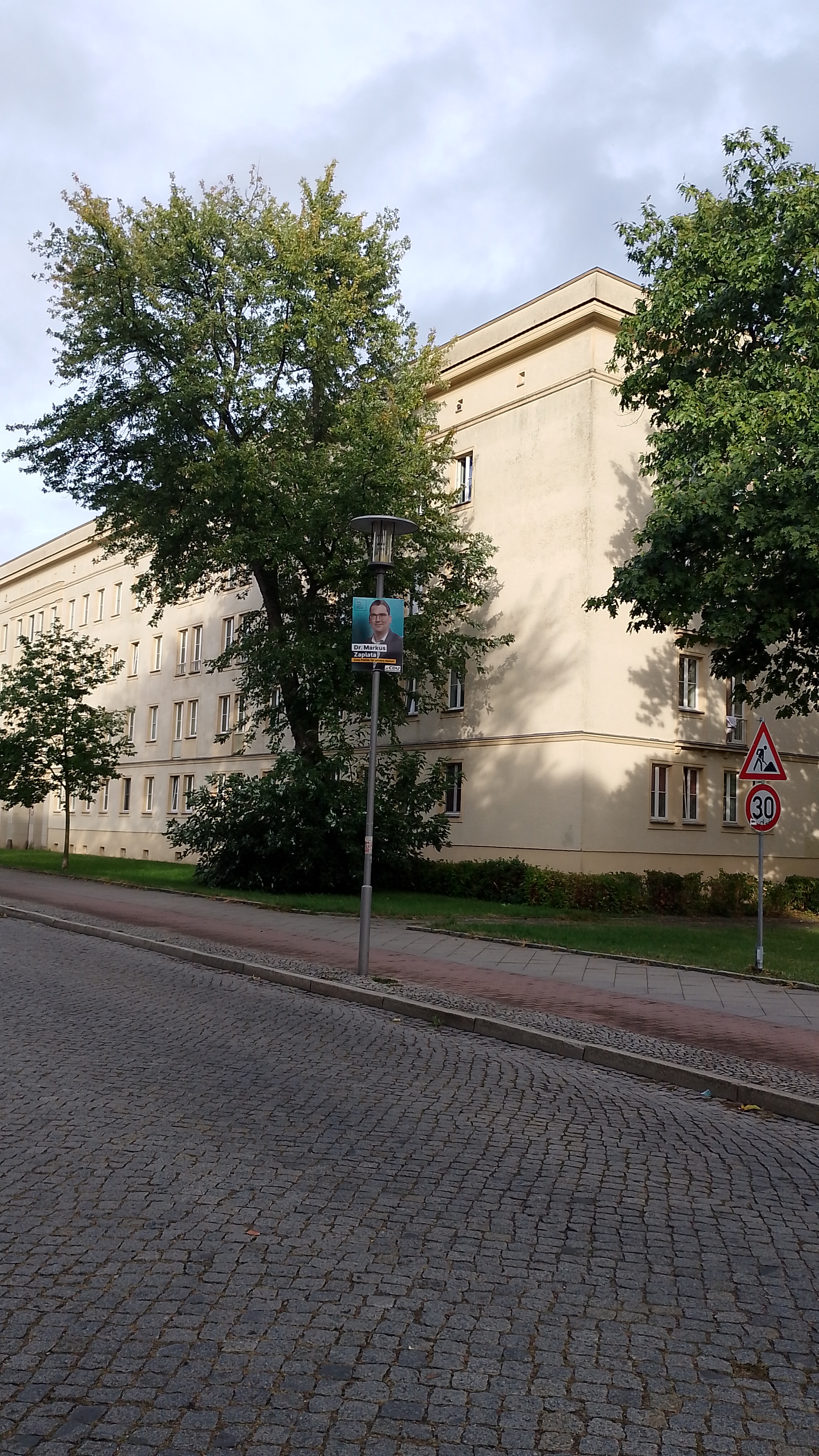
Only two members have campaigned, including the party leader. He personally hung posters on lampposts, had 2,000 leaflets printed, and tried to distribute them to people who were generally uninterested. The SPD, Green Party, FDP, and Die Linke appear to have not campaigned at all. Posters from these parties were nowhere to be found in the city.
There had been no public debates between the party leaders. The CDU party leader said that the social organization Volkssolidarität e.V., Eisenhüttenstadt had invited him to such a debate, together with the other party leaders, with the exception of those from the AfD. Upon arrival at the community center, it turned out that there was no audience at all. Perhaps no one had been invited, or perhaps no one had been interested. There was also no press present. They talked for two hours, and then everyone went home. The party leader was unclear about the purpose of this meeting. The press had never reported on the substance of the “election campaign” either.
He considered the AfD’s victory (40.5%) no less remarkable as annoying because the AfD had been virtually absent from the municipal council and had rarely or never contributed to any decision-making. Several attendees argued that this observation could be made for many municipalities, districts, and state parliaments: it is irrelevant that one does nothing in the democratic bodies to which one has been elected. In the absence of a public sphere, this absence is not really noticed, and perhaps it also leaves AfD voters completely cold.
An alternative for Germany is gathering momentum
Unlike the other parties, the AfD is very successful in mobilizing people for its own rallies. The CDU leader later sends us a YouTube link to substantiate this. In the YouTube film, which lasts over two hours, we see a very well-attended AfD meeting in Eisenhüttenstadt, five days before the Landtag elections in September 2024.[10] There are over 200 people, the older ones are seated, the many young people are standing at the back of the hall. The main speakers are Dennis Hohloch and Maximalian Krah. The film, which has been viewed 38,000 times, was made by Weichreite TV, which has 236,000 subscribers and has uploaded more than 3,000 similar videos, attracting a total of more than 200 million viewers.[11] Although the channel presents itself as an independent, alternative medium, it is primarily a platform for the radical or extreme right.[12]
Former history teacher Hohloch (1989) is the AfD faction leader in the Brandenburg state parliament. His wife, Mary Khan-Hohloch, represents the AfD in the European Parliament and is the daughter of a Pakistani refugee who came to Germany in 1989. In April 2024, Hohloch was formally categorized as “right-wing extremist” by the Brandenburg Verfassungsschutz (Constitutional Protection Agency), along with five other members of the 24-person AfD parliamentary fraction.[13] In April 2025, the entire AfD in Brandenburg was classified by the state Verfassungsschutz as a “confirmed right-wing extremist organization,” which the AfD is challenging in court.[14]
The 142-page report by the Verfassungsschutz provides an overview of the connections and statements within the right-wing extremist milieu in Brandenburg. The conclusion includes the following:
“Leading representatives of the AfD-LV BB [Landesverband Brandenburg – Brandenburg regional association] discredit political opponents and representatives of the state, casting doubt on the legitimacy of constitutional procedures and decisions in a manner that does not serve the debate on the issues at hand, even if polemical, but rather aims to generally disparage the political system of the Federal Republic of Germany. During the election campaign in the summer of 2024, political opponents were even threatened with criminal prosecution in the event of an AfD takeover of the government, without the AfD being able to adequately explain the reasons for this. The party conceals violations of the principle of democracy by claiming that democracy has been suspended and could only be restored by the AfD as the true opposition force… The AfD-LV BB presents itself as the only true representative of a supposedly homogeneous will of the people, which must be enforced against a conspiratorial elite cartel of parties, the state, the media, and the judiciary, or helped to achieve a political breakthrough. In addition, high-ranking politicians of the AfD-LV BB repeatedly questioned the separation of powers. Democratically legitimized decisions, democratically legitimized politicians, and civil society actors are thus disparagingly portrayed and branded as corrupt, anti-popular, undemocratic, totalitarian, and even criminal” (2025: 138-9; translation HTB).
Before the AfD meeting begins, Weichreite TV interviews Dennis Hohloch. There are an unusually large number of young people and schoolchildren in attendance. He explains this by pointing to the problems that they in particular are experiencing as a result of “mass migration.” In their schools, he says, migrants are stealing, extorting money, and carrying knives, girls are being raped by migrants, and teachers are forbidding them to be German. When German young people resist this, they are the ones who have to explain themselves. Only the AfD addresses these problems. “It cannot be right that we neglect our own German youth, let everyone in, oppress our German students, and then say that they themselves are to blame. No! The politicians are to blame, such as Scholz [the SPD chancellor] and Woidke [the SPD prime minister of Brandenburg]. Young people know this, and that is why they have had enough.“ With regard to the upcoming national elections, Hohloch believes that citizens have a simple choice: ”Do they want parties that want more immigration, or a party like the AfD, which wants repatriation? Do they want lies and propaganda from public broadcasters, or do they want to abolish these channels? Regarding the deportations desired by the AfD, he explains that this concerns 99 percent of refugees. They are all illegal, have entered via another EU member state, are criminals, or have come to Germany under false pretences.
In the amiable speech that Hohloch then gives, he reiterates the above. “Until recently, I would not have thought the violence perpetrated by migrants in schools possible,” he says. “It is completely hushed up by politicians and the public media, but we have our own eyes and brains and know better” (loud applause)… “If those up there did their job, we wouldn’t be here in such large numbers. We would be living a wonderful life in this beautiful country if those up there hadn’t betrayed and sold us out. And that’s why we’re going to vote them out in the elections, and then we’re going to hold some of them accountable (loud applause). Those up there don’t feel responsible for us, even though we elected them to make good policies for us, and because they haven’t learned anything and have no idea what we’re going through, they try, with the help of their friends in the public media, to sell us a reality that doesn’t exist at all…
Germany is a very rich country, Hohloch continues. When citizens need a daycare center, when schools need to be renovated, when pensions are so low that elderly people have to collect deposit bottles, we are told time and again that there is no money. But let me tell you how much money there is! Every year, the German government spends 48 billion euros on migration.[15] The city of Potsdam spends 260 million on migrants. I sat on the city council for years and had to discuss a school development plan, money for schools, daycare centers, and sports facilities. But for people who have come here, who cheat us, who threaten us, who abuse social services and who have no business being in our country in the first place, suddenly 260 million is made available! This must finally stop! We in the AfD promise to stop this illegal mass migration (loud applause). We will end the asylum industry and build up the deportation industry. We will put an end to public broadcasting. Their journalists live in a parallel universe; they have no idea what is going on in this country. When I ask them what they are more afraid of when they walk at night through Potsdam train station or downtown Eisenhüttenstadt, me, a “confirmed right-wing extremist,” or the migrants hanging around there, they answer, “you!” (loud laughter). That’s completely insane, isn’t it?
Hohloch goes on to elaborate on what will change in schools once the AfD is in power. First, the consequences of mass migration for safety in schools will be investigated. Teachers do not dare to speak out about this today because they are all afraid. They all see it, but remain silent. Thanks to the AfD, however, they will be able to speak their minds honestly. In addition, children who do not speak German will no longer be allowed to attend normal German schools. That is what the AfD promises (loud applause). There must also be a maximum of 10 percent of children with a migrant background in school classes. When there are more than four children with such a background in the class, normal education is no longer possible, Hohloch says, based on his experience in Berlin.[16] Of course, knife-wielding students with a migrant background who threaten others, extort money, are violent, and make it impossible for others to receive an education must leave school. They can be educated at home, which worked very well during the coronavirus pandemic. At the same time, the social benefits of the parents concerned must be cut. It must be made clear to them that they are responsible for raising their children and that, as long as they are in Germany, their children must abide by German rules (loud applause). With regard to performance levels in schools, Hohloch states that every second pupil in the fourth grade is currently unable to write. Every third pupil is unable to do arithmetic. Every fourth pupil is unable to read. This is not a joke! And then we are also bringing 250,000 Kenyans to Germany. The percentage will then rise to 70 percent! We have raised a nation of illiterates, and that in a Bildungsland (an education-focused state)! The proposal of Hohloch to no longer teach English in the first four years of education was received with loud applause, as well: let the children in Germany first learn to speak German properly.
Finally, the guest of honor at the meeting, Maximilian Krah (1977), takes the floor. This Catholic lawyer, father of eight children by three different women, has been a member of the German Bundestag for the AfD since 2025. Prior to that, he was a member of the European Parliament for six years. Until 2016, he was an active member of the CDU. Krah has been involved in a long series of controversial activities, scandals, and lawsuits.[17] Among other things, he has been and continues to be suspected of corruption, money laundering, tax evasion, espionage (for China and Russia), and incitement. Even for his own party colleagues, it was often too much. The Bundesamt für Verfassungsschutz (Federal Office for the Protection of the Constitution) has categorized Krah’s statements as “ethnic nationalist” (“völkisch-nationalistisch”), “Islamophobic,” “xenophobic,” and “anti-constitutional”.
In his loosely strung-together, associative speech, Krah primarily plays on feelings of pride, Heimat, nation, unity, strength, family, and tradition. The concept of “character” in particular runs throughout his remarks. He begins by praising Eisenhüttenstadt as a beautifully planned city of pioneers who have every reason to be proud of what they have achieved in their lives. This is your city! (applause).
The AfD will change the fact, Krah says, that parents feel they must tell their children: if you want to make something of your life, you have to leave. Because of high energy costs, the steel city supposedly no longer has a future. After all, Germany has the highest energy prices in the world.[18] Only through government subsidies can the steel plant still survive. But that, Krah promises, is what the AfD will change. Exactly how this is to happen remains unclear, but the mood in the room quickly turns enthusiastic.
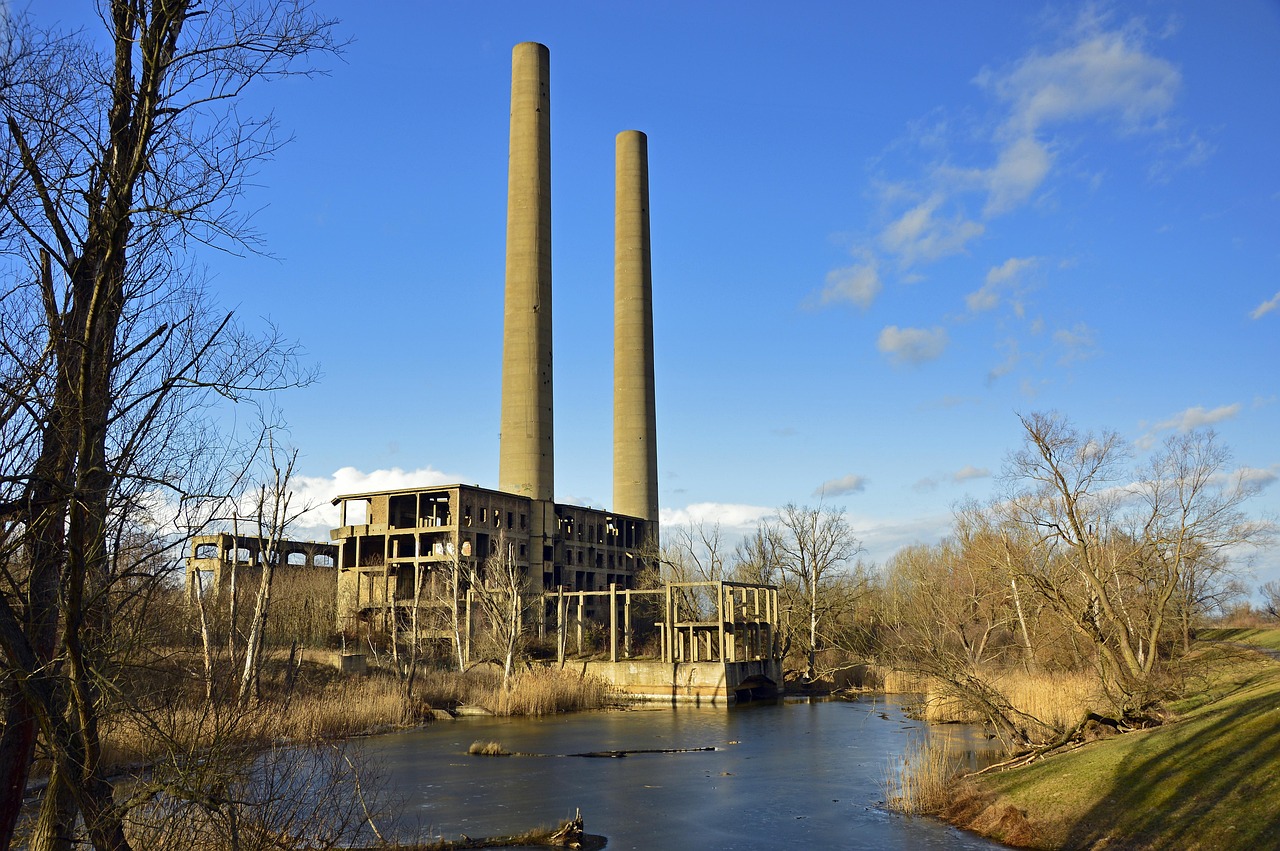
Eisenhüttenstadt is not unique, Krah emphasizes. He himself comes from Saxony, and there too there are towns people are leaving after lignite mining and coal-fired power plants were shut down. What politicians offer as an alternative, he says, is to relocate parts of the civil service to these places. But you already know how that turns out, Krah tells his audience: the top positions go to people from the West, and what remains for you are jobs as cleaners and caretakers. And then you tell your children: leave. But we say: stay right where you are! (applause)
Of course we cannot perform miracles, Krah admits. The political mistakes of the past decades cannot be repaired overnight. But what we promise is that the blanket lying over this country — the feeling that everything is pointless and nothing works — will be lifted by us. We will restore your confidence in your own Heimat. We will make sure that you are once again masters in your own home. We will create the same kind of optimism and sense of new beginnings that existed when Eisenhüttenstadt was first built. It is about believing in the future, especially for young people, Krah stresses. They are living with great uncertainty. In every area of life.
Krah continues without pause in an attack on the LGBTQ+ community: “I do not believe,” he says, “that anyone over the age of thirty has ever questioned whether they are a man or a woman. I also do not believe that anyone has ever had a teacher who asked them this question. There are only two sexes.” (He raises two fingers in the air to loud applause.) “You,” Krah addresses the young people, “can tell your left-wing ethics teachers this to their faces tomorrow or the day after, and if you get bad grades because of it, know that life is about decency (Anstand) and character.”
“You are men or women,” Krah continues. “Those who are not right-wing are the ones who doubt this. I cannot reach these people—they vote for Woidke. Men and women form families. These families are struggling today. They have to fight for their survival while also raising you. Respect your parents,” Krah urges the young audience. “Preserve unity. When the family falls apart, there is nothing left to act as a corrective against the indoctrination, lies, and confusion you are exposed to in schools, on television, and elsewhere.”
“This is why you are so important,” Krah points to the young people present. “When you vote AfD, the older generations will follow. You set the trend. I don’t need the majority. I need the cool ones. I need you!” (loud applause)
“Pride and character are what this country needs. Especially with character, pride, and backbone, Eisenhüttenstadt will also pull through. What you have built here is unique, and you can be proud of that. Beyond being a pioneer of Eisenhüttenstadt, one is also German. And you should be just as proud of that, no matter what professors, journalists, or politicians may claim.” (“Jawohl!” the audience shouts to loud applause.)
“Pride and character are what keep people standing in life. Huge changes are coming. Many professions will no longer exist in fifteen years. The world is increasingly digitalized and computerized,” he explains, “and you cannot compete with that. A lawyer like me can know a thousand laws. The computer knows them all. In this world, only two things remain. One is manual work. The second is character. What sets you apart from computers is character. In a life increasingly governed by computers, you must maintain perspective. Perspective comes from character. Character means knowing who you are and having learned to think.”
“At school, you must once again receive the Bildung that older generations received. Nowadays, students learn no history, no facts, no content. Every older person present here has learned more than the younger generation, and that should give you pause.
You must be strong,” Krah assures the young audience. “We want you to be strong. That is what distinguishes the AfD from Woidke and the CDU. They want submissives. They want to atomize you completely first, so that there is no Volk, no community, no Heimat. Anyone who speaks of Volk even has to deal with the Verfassungsschutz. Heimat and Volk do mean something,” Krah emphasizes, “just like family. It means putting down roots. Family means forming a union with someone of the opposite sex, having children, and continuing your line.”
“You deserve respect for what you have achieved in life, and you must also demand this respect,” Krah stresses. “Fight for your respect! There were times when you were made to feel ashamed for voting AfD. Now is the time when you can ask anyone who votes SPD, CDU, or the Greens: are you not ashamed of putting our children’s future at risk? You will only get respect when you choose AfD,” Krah continues. “Since 1990, politics has only been made for the cyclists in Peru[19] or for the oligarchs in Ukraine. But with the AfD, you will once again be masters in your own country, in your own land, in your own city!”
“Soon nothing in this country will work without the AfD,” Krah assures the audience. “We already have a third of the vote in three federal states. Only now are they starting to listen to you. They are afraid of you. You must learn to love yourselves again, to have self-respect. Only then will you earn the respect of others. You,” Krah again points to the young people, “are a thousand times better than those left-wing idiots for whom they’ve now legalized hashish. The only thing they have to offer is a big mouth. But if you stand up for who you are, for your family, for your community, for Germany, then you can put all those idiots in your pocket.” (loud applause)
“We need you. We need you in the streets. We need strength. You have to speak to others. Politics is not a pony park. It is reality. You have to fight!”
Desperation
After the U.S. presidential election in November 2024, the participants of our civic dialogue meet again. Eight people are present. What stands out once more is the sense of desperation. The future is viewed in very dark terms. For the Bundestag elections in 2025, the participants expect that the CDU will become the largest party, and that only a grand coalition with the SPD will achieve a majority.[20] They believe this will make little difference for actual policy. The AfD is expected to once again position itself as a victim and as the voice of the unheard majority, and in the next election it may grow even larger. A majority may even be at stake. Possibly, the next government is the last chance to prevent Germany from becoming ungovernable.
As a solution, it is suggested that everyone take responsibility to engage with people who vote for far-right radicals. At the same time, the participants suspect that it may already be too late for this. They also point to the influence of social media, which urgently needs to be regulated. Yet here too, it is likely already too late.
All participants have a strong aversion to Donald Trump. They cannot understand, after everything that happened during his first term, why people continue to vote for him. It seems completely irrational and cannot easily be explained. Is it stubbornness? The fact, several participants note, is that Americans are utterly uninterested in the issues we think they should care about: Ukraine, foreign affairs in general, democracy, the rule of law, and the separation of powers.
The participants consider citizen rationality in general to be sorely lacking. People vote for political parties that will clearly harm their own interests, yet they are unaware of it. The AfD is against state support for the steel plant in Eisenhüttenstadt — and yet people vote for them. The AfD leans strongly toward Russia; have its voters forgotten what it was like when the Russians controlled East Germany?
Some propose giving the AfD power so that citizens can experience firsthand how incompetent the party is. Others counter that this has already been tried before — they think of 1933 — with hardly uplifting consequences.
One of the participants suggests that democracy may be only a temporary phase in history. In fifty years, people may look back on this attempt at democracy with amazement. The future might belong to “illiberal democracies” or authoritarian systems. The other participants can offer little hope in response.
Notes
[1] Stadt Eisenhüttenstadt. 2023. Statistische Daten zur Bevölkerung und zum Arbeitsmarkt
Jahr 2021/2022. https://www.eisenhuettenstadt.de/media/custom/2852_4858_1.PDF?1680769122.
[2] https://interaktiv.tagesspiegel.de/lab/landtagswahl-brandenburg-so-hat-eisenhuttenstadt-gewaehlt/. In Duitsland brengen kiezers twee stemmen uit: een eerste op hun favoriete kandidaat, en een tweede op hun favoriete partij. De hier genoemde percentages betreffen de tweede stem.
[3] https://wahlergebnisse.brandenburg.de/12/600/20250223/bundestagswahl_land/ergebnisse_gemeinde_120670120120.html.
[4] For a substantive justification of various forms of deliberation, of which citizen dialogues are an example, see my Talking Politics and Society Again: Reengaging with Fellow Citizens (2025).
[5] Over the years, we have held hundreds of deliberative meetings with a wide variety of participants throughout Germany, addressing questions such as “What is democracy?”, “What do freedom and emancipation mean?” and “What motivates people to discriminate?” In West Germany, this usually led to a lively discussion among the participants, who constantly supplemented each other’s ideas and jointly developed a concept of, for example, democracy. In East Germany, however, the same questions were often perceived as an insult: “Are you suggesting that we don’t know what democracy is?” This sensitivity often hindered an open exchange of ideas from the outset. See Blokland 2025.
[6] For a report by Joachim Scholz on another series of citizen dialogues organized by Social Science Works: Bürgerdialoge in Paulinenaue – Kurzbilanz nach einem Jahr (https://paulinenaue.info/index.php/buergerdialoge-in-paulinenaue).
[7] Fifteen percent of the German population lives in the new federal states. However, these newspapers only have about 3% of their subscribers in the east. In 2020, the FAZ had about 7,000 subscribers in all of eastern Germany (total circulation 235,000). The SZ sold 8,300 copies (out of 326,000) and Der Spiegel 25,000 (out of 642,000). I will return to media usage later.
[8] According to figures from the Federal Statistical Office, around a third of the German working population will retire in the coming decade (https://www.destatis.de/EN/Press/2022/08/PE22_330_13). In Brandenburg, the percentage is even higher. According to the Federal Employment Agency, Germany needs around 400,000 migrants annually to cope with this development (https://iab.de/warum-braucht-deutschland-400-000-migrantinnen-und-migranten-pro-jahr).
[9] At the beginning of 2025, the CDU had approximately 5,400 members throughout Brandenburg, out of a population of over two and a half million. This means that approximately 0.22% of the population was a member of the CDU. The SPD, traditionally the party with the largest membership in Germany, had over 400 more members (Berliner Zeitung, February 9, 2025). However, the SPD’s membership has also been declining steadily since the 1990s. It is noteworthy that the membership numbers of the Green Party (3,660) and Die Linke (4,118) are much higher than the number of votes would suggest. This could be interpreted as further polarization among citizens. The AfD, now the largest party in the polls, had no more than 2,771 members at the beginning of 2025. More and more citizens are voting for the radical right, and in their desperation, others are joining parties such as the Greens. This party also welcomed a large influx of members after Donald Trump was re-elected president in 2024.
[10] AfD “Einladung zum Wahlkampfabschluss, Max Krah 17.9.24 Eisenhüttenstadt.“ https://www.youtube.com/watch?v=B-bbjn7VJWo.
[11] An interview with a certain “Lotti” in Wismar (Mecklenburg-Vorpomerania) during a demonstration against Christopher Street Day in September 2024, for example, attracted 2.5 million viewers and had more than 13,000 comments (https://www.youtube.com/watch?v=xx8EPC8IBO8). For further impressions of the omnipresence of right-wing radicals on the internet, see: Blokland 2025: 87ff.
[12] See an analysis by chronik.LE, which documents the activities and statements of right-wing radicals in Saxony: Auf der Straße und im Parlament: Der rechte Medienaktivist “WeichreiteTV (May 5, 2023) (https://chronikle.org/dossiers/auf-der-strasse-und-im-parlament-der-rechte-medienaktivist-weichreitetv).
[13] In Germany, each federal state has a “Verfassungsschutz” which, as the name suggests, monitors all groups and individuals who are considered a potential threat to the laws and rights enshrined in the constitution. If, after investigation, it is concluded that this is indeed the case, individuals or groups may be classified as “gesichert Extrem” (confirmed extremists). The activities of the person or group concerned are then monitored. A Verfassungsschutz is also active at the national level, with a similar mission. https://www.rbb24.de/politik/beitrag/2024/04/brandenburger-verfassungsschutz-stuft-afd-abgeordnete-rechtsextrem-ein-hohloch-schieske.html.
[14] Ministerium des Innern und für Kommunales. 2025. Einstufung des Landesverbandes Brandenburg der Partei „Alternative für Deutschland“ als gesichert extremistische Bestrebung.
[15] It is difficult to determine exactly how high the costs are in a highly decentralized country such as Germany, where various levels and bodies of government are responsible for the reception and integration of migrants. It also varies greatly from year to year. After Russia’s invasion of Ukraine, for example, Germany took in more than a million refugees from that country. Such calamities do not occur every year. Refugees also contribute to tax revenues as soon as they start working. Of the million Syrian refugees who arrived in 2014-5, more than 60 percent (and more than 70 percent of the men) were working after seven years, mostly in skilled professions (Brücker et al 2024). Hohloch probably did not deduct the tax revenues that the German state enjoyed from these professions from the (probably overestimated – see Pieper 2023) costs. The return of all Syrians, as demanded by the AfD, would now be a huge blow to the German healthcare system in particular.
[16] In Berlin, approximately 55% of children and young people have a migrant background, while across Germany as a whole, this figure is around 29% (Senate Department for Education, Youth, and Family Affairs 2025). A migrant background means that the person concerned was not born in Germany or that they have at least one parent with such a background. If Hohloch’s proposal were to be adopted, it would mean that 45% of Berlin’s schoolchildren would no longer be able to attend school. Apart from the fact that this is unconstitutional, the question is what should happen to these children.
[17] One wonders where a single individual finds the energy today to become entangled in such a vast number of controversies. The list is too long to summarize here. Wikipedia provides an overview: https://de.wikipedia.org/wiki/Maximilian_Krah.
[18] This claim by the AfD does not correspond to the facts. Prices rose after Germany, together with the other EU countries, boycotted Russian gas in response to Russia’s invasion of Ukraine. Previously, Germany had made itself extremely dependent on this relatively cheap gas. The energy transition that has been underway since then is now bringing prices down. Today (2025), sixty percent of electricity comes from wind turbines and solar panels (https://eufactcheck.eu/factcheck/mostly-false-germany-faces-the-highest-energy-costs-worldwide-which-is-making-its-economy-noncompetitive; https://energiewende.bundeswirtschaftsministerium.de/EWD/Redaktion/EN/Newsletter/2025/04/).
[19] On the internet, the AfD and affiliated groups consistently claimed that the German government, on the initiative of Foreign Minister Annalena Baerbock, had provided €315 million in subsidies to Peru to build bike lanes. In countless memes, TikTok, Instagram, and Facebook posts, and YouTube videos, this laughable “cycling project” was ridiculed as a typical example of left-wing wastefulness at a time of major domestic needs. In reality, the Ministry for Economic Cooperation (led by the SPD) had provided subsidies and, primarily, loans totaling between €20 and €40 million for a broad range of sustainable mobility projects (https://www.n-tv.de/politik/Das-Maerchen-vom-315-Millionen-Euro-Radweg-in-Peru-article24691195.html).
[20] This expectation came true, although the SPD and CDU were only able to secure a majority because the Bündnis Sarah Wagenknecht (BSW), excluded by the CDU, narrowly failed to reach the five percent electoral threshold. Also after the 2025 Brandenburg Landtag elections, the AfD could only be kept out of government because the SPD formed a coalition with the BSW. This coalition fell apart after six months due to ongoing internal conflicts within the BSW. To avoid new elections — the AfD is polling around 40 percent — the SPD is now entering a coalition with the CDU. Many see the remaining term until the next elections as the last chance to turn the tide.